How did MPL acquire its first ten lakh users? - A growth story
- Manasi Rai
- May 9, 2024
- 5 min read


There are over 1.1 billion online gamers worldwide. Out of which, the revenue generated by online gaming companies soared to $26.14 billion, all alone in 2023. Talking about India, the gaming revolution came into existence a decade ago. Indians love the rewards. And here's where MPL marked its success.
Talking about numbers, a hundred companies are operating in India, MPL being one among them. The MPL mobile app was launched back in 2018, and the most astounding part? MPL was able to grab 10 lakh users within three months.
10 lakh was the company's yearly subscriber goal, but how did they do it all in just three months? Let's get into the lines now!
The Genesis
As of 21 August 2023, the valuation of MPL was $2.19 billion. The annual revenue as of March 2023 recorded $105 Million. And to the best, MPL ranks 9th out of 1713 competitors in the space.
Founded in the year 2018, and headquartered in Bengaluru India, MPL is run by two masterminds. Right now the company is at Series E funding, and the total funds it has received is approximately $406M. The latest funding round happened in August 2023, when the company bagged $2.61 Million, according to Tracxn.
The founders are - Sai Srinivas Kiran G and Shubham Malhotra. The parent organization is Galactus Technology Private Limited.
To give you a quick sneak peek - MPL is an e-sports and gaming platform. It provides users access to an abundant pool of games like fantasy sports, free fire, carrom, ludo, action games, and much more.
The best part is, it offers players real cash rewards. It's enticing because there are also many bonuses attached to these rewards. MPL can be accessed via its mobile application (not available on Play Store or App Store, but instead one has to go for the APK version). Both Android and iOS users can use it and instantly get access to all the 60+ games.

The story of the founders

Sai Srinivas
Sai Srinivas is an aeronautical engineer, who did his B.tech from IIT Kanpur. After his graduation, he worked at Zynga, a gaming company. Over here, he was an associate product manager, when he was a product manager, the concept was not even a thing. Then he joined Bharti Softbank, again as a product director. He co-founded CREO and was appointed as CEO, which was further acquired by Hike.
After this, Sai decided to get into the esports sector, and here's where he co-founded MPL. However, back in 2009, Sai even co-founded a company that organises and promotes live events, Base9.
Shubham Malhotra
Shubham did his BE from BITS Pilani. Initially, he worked as a CTO at Capillary Technologies, he co-founded this company. Then he co-founded CREO, again, working as a CTO. He stayed at home after the acquisition and worked as the Head of Engineering. Later, with Sai Srinivas, Shubham became the co-founder of MPL.
The concept and the reality
While gaming was not initially at the forefront of both the minds, a random observation was all that it took for MPL to come into reality. Sai, the co-founder, observed students at his college. A majority of them were into games, and this sparked the MPL idea.
Immediately after college, they both ventured into different startups, CREO being one among them. Both the founders gain experience in both small and huge setups. But the concept of building a competitive gaming app was always there.
The story behind naming and branding
So, there's a story that goes behind why MPL only. Initially, the founders thought of naming the app M-league. But somehow it didn't excite them. Later, they pivoted to MPL, just because they realised the popularity of leagues - IPL and EPL.
The concept validation part
The founders of MPL didn't write code or build the app initially. Because somehow the founder still was unsure about whether the product is a market fit.
To understand the thrill of competition, to know whether people will stick to something like this, they brought in a bunch of folks. Initially, it was a person who used to make food at their place, they got him and all the others together.
The idea was simple, allow each one of them to play a simple summer game where they just run endlessly. There were variants here, first being whoever will run the longest throughout is the winner.
The players initially played two rounds for free. In the third round, they were asked to pay a small entry fee, a couple of them denied, but a couple (8-9) agreed. There was a leader board showcasing the winners, and then there was the third, fourth, and fifth round that spanned for at least two hours.
Here's where the founders knew that MPL was a product market fit.
The launch happened in September 2018.
The APK Strategy

MPL initially rolled out its app as an APK (Android Package Kit), instead of distributing it on traditional approach stores.
This helped them bypass the app store restrictions. App stores often lay out strict guidelines and restrictions regarding app content, monetization methods, and in-app purchases. By distributing its app as an APK, MPL got full control on its app features and monetization strategies.
APK also helped them with cost reduction. The cost of acquiring customers through downloading an app from a web page versus from an app store like Google Play or the Apple App Store, there's much difference. There were no app store fees it had to pay or commissions.
Also, by driving users to download the app from its website, MPL was able to implement targeted marketing campaigns and track user behaviour more effectively. Starting from knowing the demographics to understanding the preferences, the acquisition got more effective here.
The expansion strategy

Both the co-founders didn't come into the market for just one game, but multiple. That's what the first thing they did. For people to love the gameplay, and for them being the founders, to improve the game play, both brought in many developers.
Why developers?
MPL initially was a platform for developers. Any developer can publish their gaming content and the founders will help them to monetize.
Amazon Web Services comes into the picture now.
The startup was launched on the AWS cloud as many developers had experience on this platform. The primary database was Amazon Aurora, but with the growing numbers (volume of unstructured data) MPL shifted its Amazon database service, from Amazon Relational Database to Amazon DynamoDB NoSQL.
The marketing strategy
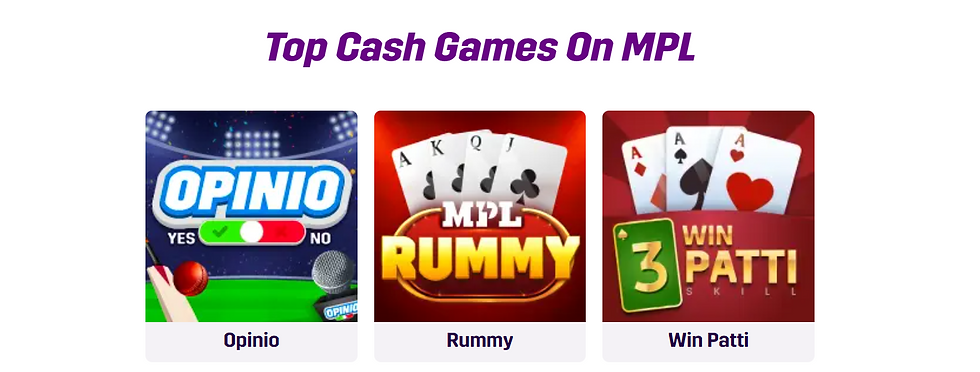
Guerrilla marketing. The founding members vouched on this marketing tactic. They went out and did a lot of YouTube influencer campaigns because Instagram was not a thing back then. More and more people talked about their experiences. Many created videos of them playing in MPL.
Word-of-mouth-driven marketing is what worked. A certain sect of influencers did a lot of marketing, and that's how MPL was able to gather a large audience within such a limited period.
When it comes to why users stick to this app - Monetization multiplies on MPL when people spend more and more time on the app. If they are competing once, they will compete once more, and the cycle goes on.
The road ahead (the journey after 2019)
The whole MPL business model revolves around the app. It collects money as entry fees from users holds tournaments (20% of the total it gets as the hosting fees), and advertisement is also a major source of income and in-app purchases.
In 2020, MPL was the official sponsor for Kolkata Knight Riders and Royal Challengers Bangalore, which means they promote themselves where they know their target audience is. Back in 2019, Virat Kohli was the MPL's brand ambassador, and as of today's date, 9 Cr+ Indians are MPL users.